
Whether you’re installing a new fence or replacing an old one, understanding fence height rules UK regulations is essential. After all, these rules affect homeowners, landlords, farmers and business owners alike. Because of this, knowing the legal limits before you start work can save time, prevent neighbour disputes and avoid planning permission issues. In this complete guide, we break down the rules for domestic, commercial and agricultural properties, while explaining when exceptions apply and how Staffordshire Fencing Contractors can help.
What Are The UK Fence Height Rules?
In most cases, garden fences in the UK can be built up to 2 metres high without planning permission. However, there are several exceptions depending on location, boundary type and visibility from highways.
To clarify matters, the rules differ slightly depending on the use of the property:
- Domestic (gardens, shared boundaries, driveways)
- Commercial (business premises, industrial sites, security perimeters)
- Agricultural (farmland, livestock enclosures, equestrian areas)
Because these settings have different safety, privacy and security needs, height allowances vary.
Domestic Properties: Garden Fence Height Rules
- Up to 2 metres: normally no planning permission required
- Between 2 and 2.4 metres: may require permission
- Over 2.4 metres: permission almost always required
Yet, there are important exceptions.
If the Fence Borders a Road or Public Footpath
If your fence meets a public highway, the maximum height without permission drops to 1 metre. This rule aims to maintain visibility for drivers and pedestrians.
If You’re Replacing an Existing Fence
Replacing your fence like-for-like usually doesn’t require permission, even if the height is near the limit. However, increasing the height might require approval.
Conservation Areas & Listed Buildings
Certain areas have stricter rules. Additionally, homes near heritage buildings often need consent. Always check with your local planning authority.
Shared Boundaries
Legally, you cannot alter a shared fence unless you either own it or have permission from the neighbour. Because disputes are common, it’s best to confirm ownership using title plans.

Commercial Properties: Height Rules For Business & Industrial Sites
Commercial sites typically require taller fencing to support security, access control and Health & Safety compliance.
Standard commercial fencing heights:
- 2–2.4 metres: suitable for most businesses
- 2.4–3 metres: often used for security fencing
- Over 3 metres: may require planning permission
Furthermore, certain types of fencing — such as palisade or mesh security systems — have recommended minimum heights to meet insurance requirements.

Agricultural Properties: Height Rules For Farms & Livestock Fencing
Agricultural fencing is regulated differently because it must keep animals safe and secure. Therefore, fence height depends on the type of livestock.
Typical minimum heights include:
- Horse fencing: 1.2–1.4 metres
- Cattle and sheep fencing: varies depending on species
- Deer fencing: significantly higher
Although agricultural land often has fewer planning restrictions, large boundary fences near residential areas or roads may still require permission. Additionally, electrified fencing has its own safety rules.

When Planning Permission Is Required
Planning permission may be necessary if:
- Your fence is over 2 metres
- It borders a highway and is over 1 metre
- Your property is listed
- Your area has special restrictions (e.g., conservation areas)
- You’re adding height to an already tall boundary
- The council has served previous enforcement notices
When in doubt, checking with your local planning authority is always wise.
Do Different Fence Materials Affect Height Rules?
Technically, the rules apply to any boundary structure, including:
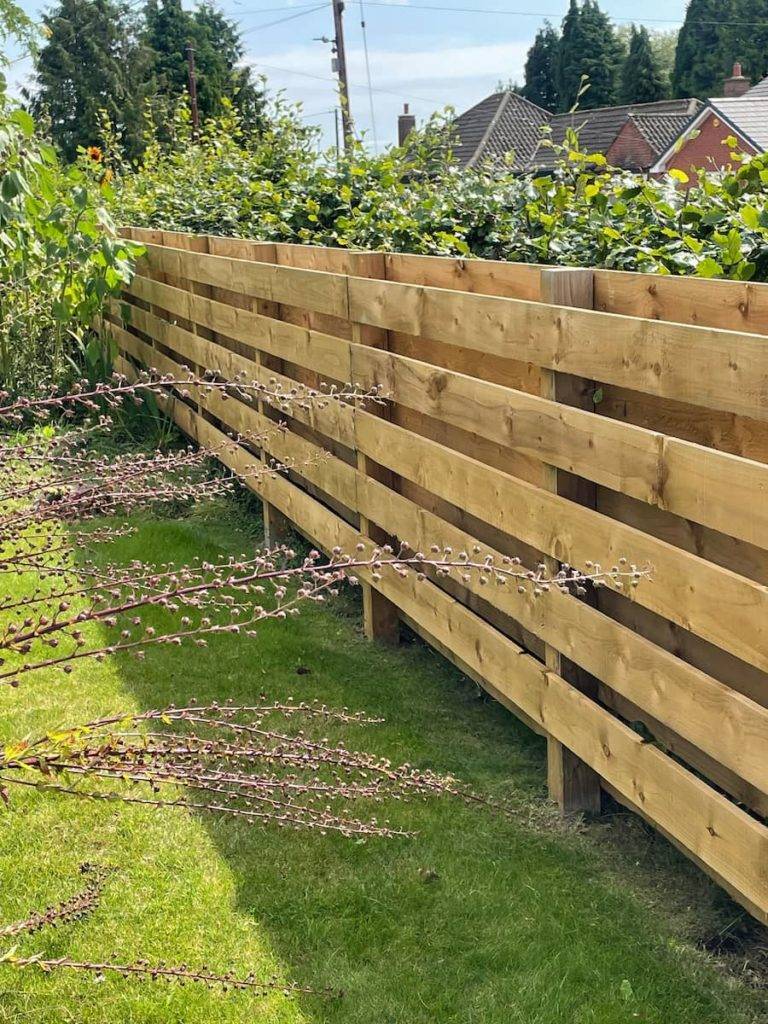
- Timber panel fencing
- Feather edge fencing
- Post-and-rail fencing
- Security fencing
- Metal mesh or palisade fencing
- Brick walls
- Hedges
However, hedges follow slightly different guidelines and rarely require permission unless they obstruct access or cause disputes.
Fence Height For Privacy Vs. Light Access
While many homeowners want taller fences for privacy, neighbours may worry about reduced sunlight. Although planning authorities consider both factors, they often prefer:
- Gravel boards for small height increases
- Trellis panels as a legal way to add height without major structural changes
Trellis can usually raise a fence up to the permitted 2-metre limit while still appearing less imposing.
What Happens If Your Fence Breaks The Rules?
If a fence is installed illegally:
- The council may issue an enforcement notice
- You may have to reduce the height
- Complaints from neighbours can trigger an inspection
- Planning permission might be refused retrospectively
Contrary to popular belief, “If nobody complains, you’re fine” is not always true. Councils can act even years later.
How Staffordshire Fencing Contractors Helps You Stay Compliant
Choosing the right fence height is easier when you work with experienced professionals. We help homeowners, businesses and agricultural clients across Staffordshire make informed decisions by:
- Advising on legal height limits
- Assessing boundary ownership
- Recommending materials suited to the site
- Installing fencing to a professional standard
- Providing security fencing options for commercial customers
- Designing agricultural systems that meet livestock requirements
Our fencing complies with local planning guidance, safety requirements and long-term durability standards.
Understanding fence height rules UK is essential before starting any fencing project. Whether you want more privacy in your garden, better security for your business or a safe enclosure for livestock, knowing the correct legal limits helps avoid costly mistakes.
For expert advice — and professionally installed fencing built to last — Staffordshire Fencing Contractors is here to help.
Quick Look At Official UK Guidance
UK Government – Planning Permission: Gates, Fences and Walls
Official guidance outlining permitted development rights and height limits for fences in England.
https://www.gov.uk/browse/housing-local-services/planning-permission-regulations-information
Planning Portal (UK) – Fences, Gates and Walls
Detailed explanations of when planning permission is required, including rules for highways and conservation areas.
https://www.planningportal.co.uk/permission/common-projects/gate-ornaments/building-regulations
Local Government Association – Planning Enforcement Guidance
Explains how councils enforce breaches of planning control, including fencing disputes.
https://www.local.gov.uk/
https://www.local.gov.uk/search/all/fencing%2Bdisputes
Historic England – Works to Listed Buildings and Conservation Areas
Guidance on restrictions affecting fencing near listed buildings and heritage sites.
https://historicengland.org.uk/about/what-we-do/the-rules-we-follow/
NFU (National Farmers’ Union) – Agricultural Fencing Guidance
Best practice for livestock fencing and agricultural land boundaries.
https://www.nfuonline.com/
Health & Safety Executive (HSE) – Workplace Perimeter Safety
Standards affecting commercial and industrial fencing for safety and access control.
https://www.hse.gov.uk/
Royal Institution of Chartered Surveyors (RICS)
Professional standards often referenced in boundary and property disputes.
https://www.rics.org/
Notes for Transparency
- Fence height limits referenced reflect permitted development rules in England.
- Local authority policies may vary slightly, especially in conservation areas.
- Agricultural fencing is governed more by function and safety than planning height limits, unless near public highways or residential boundaries.